Sewer Line Repair in Greer, SC
Greer Sewer Pros is a sewer line repair service for Greer, SC homeowners — camera-first diagnosis, honest comparisons of repair methods, and published local pricing, so you can judge any quote before you commit to it.
Greer Sewer Pros — At a Glance
- Sewer line repair guidance and services for homeowners in Greer, SC.
- Licensed & qualified, rated 4.8 stars, with 10 years of experience and arrival within 60 minutes.
- Services: sewer line repair, trenchless repair (lining and pipe bursting), replacement, camera inspection, backup help, leak repair, tree-root problems.
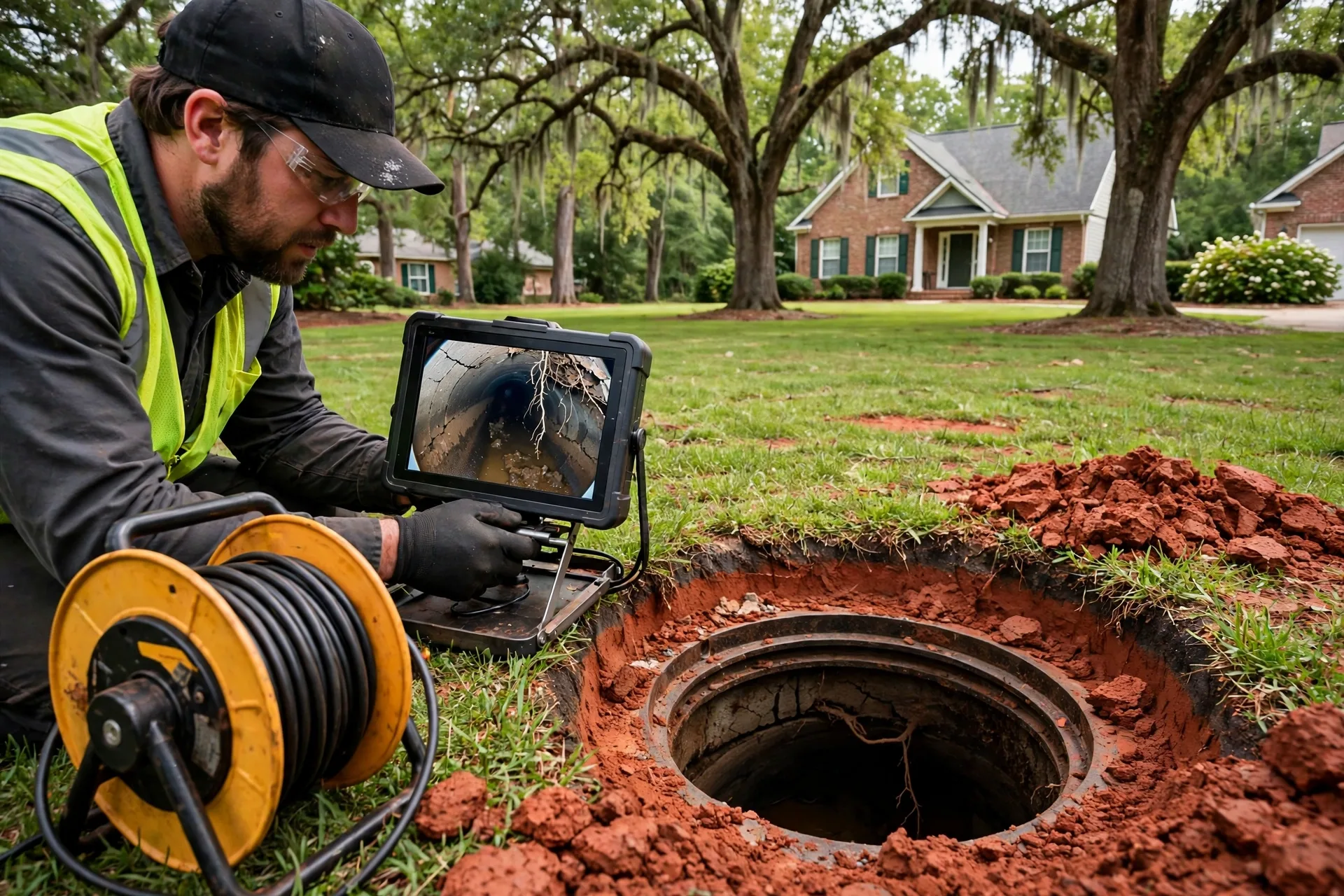
- How jobs start: with a camera inspection — the failure is located and shown on footage before any repair is quoted.
- The local rule that decides who pays: under Greer CPW's published position, the homeowner is responsible for the lateral from the house to the cleanout (typically at the road); CPW maintains the public main beyond it.
- Published local cost reference: repair $1,000–$4,000 and camera inspection $150–$400 (Modernize, Greer SC page — third-party estimates, not our prices).
- Phone: +1 (864) 874-0043
How to Tell If Your Sewer Line Is Broken
One slow drain is usually a clog in that fixture's pipe. Several of these together is a main-line problem:
- Multiple drains slowing at once — sinks, tubs, and toilets draining badly together
- Gurgling from a toilet or drain when water runs somewhere else in the house
- Sewage backing up into a tub, shower, or floor drain
- A sewer smell in the yard, basement, or crawl space that doesn't fade
- Soggy, soft, or unusually green patches of lawn along the buried line's route
- Clogs that return weeks after snaking or cleaning — recurrence points to the pipe itself
- Trouble after heavy rain — Greer averages roughly 50 inches of rain a year (about 50.7 inches in the state's 1991–2020 climate normals for Greenville County), and cracked lines drink it in
About a quarter of Greer's homes were built before 1980 (25.5% in city housing data). If yours is one of them and shows two or more of these signs, the next step is a professional sewer line inspection, not another bottle of drain cleaner.
What a Proper Sewer Repair Should Include
- A camera diagnosis first. A professional sewer line inspection finds the actual failure instead of pricing your symptoms.
- The footage reviewed with you. Ask to see your own line and have the problem shown, not just described.
- An itemized written estimate. Per-foot rate, depth, excavation, restoration, and permit responsibilities, separated out.
- More than one option, when options exist — with the reasoning, including when the cheaper one is right.
- The paperwork in writing: who pulls permits, what restoration is included, and the full scope of work.
If a quote arrives with no inspection behind it, treat it as a sales number. How to compare quotes, line by line.
How a Sewer Repair Job Should Run
Step 1 — Talk the problem through
Backups, smells, slow drains, sewage leaking in the basement, a wet spot in the yard, or a home purchase you want checked first. The symptoms decide whether an inspection, a cleaning, or urgent backup help is the right first move — call +1 (864) 874-0043.
Step 2 — Camera inspection finds the real failure
The camera travels the line from the cleanout and records what it finds: tree roots at a joint, a cracked or offset section, a low "belly" holding water, a pipe material at the end of its life — or a line that's actually sound. It also pinpoints the failure's location and depth. What a sewer camera inspection covers.
Step 3 — Compare the options honestly
With footage in hand: a spot repair for one damaged section, trenchless repair for a longer run in a pipe that still holds its shape, or full replacement when a line has failed in too many places. Not every sewer issue means a full replacement.
Step 4 — Agree the details before work starts
Method, price breakdown, permits, and restoration — in writing. After the repair, ask whether the line will be re-inspected on camera to verify the result.
What’s Likely Wrong With Your Sewer Line?
Tap the signs you’re seeing. This is general guidance to help you pick a sensible next step — only a camera in the line can say what is actually wrong.
What this pattern usually means:
Next step: a camera inspection — it shows the actual failure, its location, and its depth before anyone quotes a repair.
- Multiple drains slow — usually a restriction in the main line, not the fixtures.
- Gurgling — air pushed back through traps; a partial main-line blockage is the usual cause.
- Sewage backing up — urgent: stop running water and see the backup steps.
- Sewer smell in the yard — often a leaking or cracked line underground.
- Soggy lawn patch — the pipe leaking into the soil along its route.
- Clog keeps returning — the pipe itself (roots, crack, sag), not the blockage.
- Trouble after rain — groundwater entering a cracked line, or a sag filling with water.
Whatever the pattern, the next step is the same: a camera inspection before anyone quotes a repair.
Sewer Services in Greer
Trenchless Sewer Repair
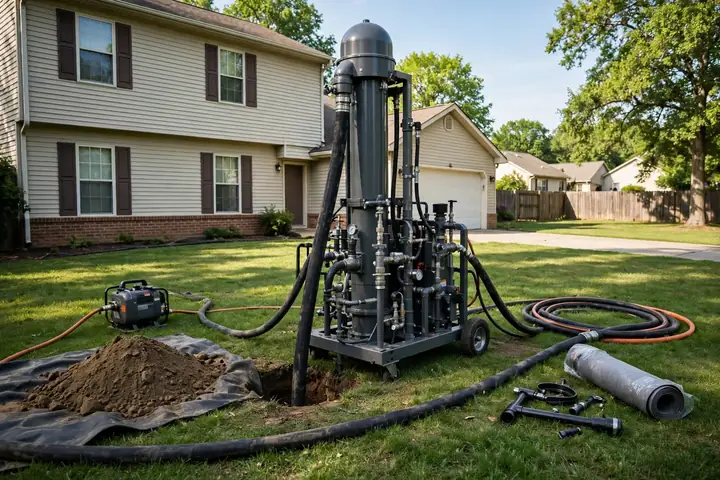
A new pipe created inside the old one — a cured-in-place liner, or a new pipe burst through the existing line — often with no trench across the yard. Eligibility is a camera finding, not a promise.
Sewer Line Replacement
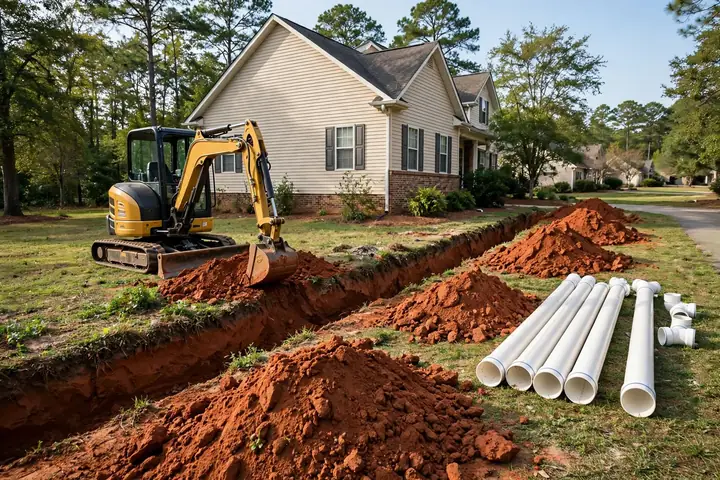
For collapsed, multi-sagged, or end-of-life lines — including under-slab runs. The full process, which pipe materials hold up best, and what replacement means for your yard.
Sewer Camera Inspection
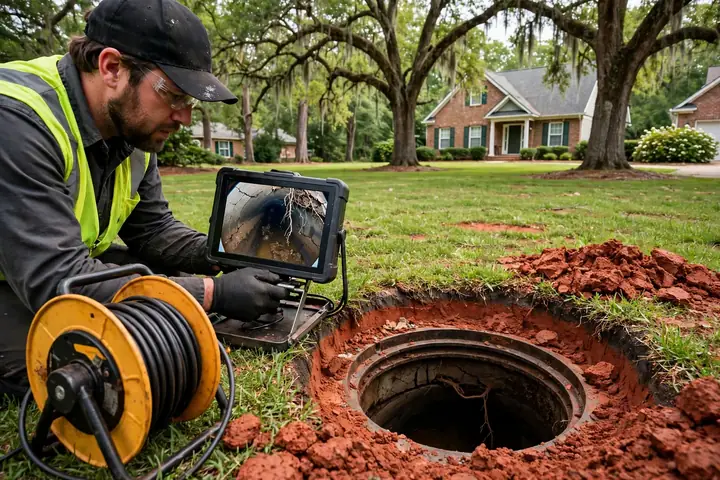
Footage of your actual line, the problem located and measured, and findings you can use to compare quotes or get a second opinion.
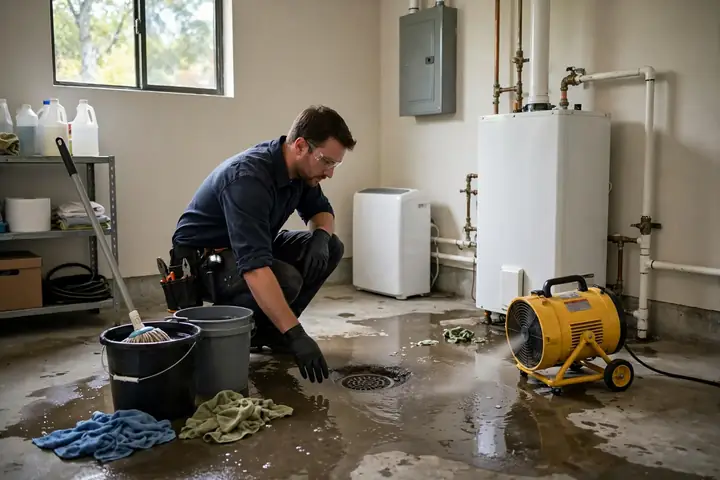
Sewer Backup Help
Sewage in the house is the urgent form of every problem on this page — steps, costs, and coverage answers, in that order.
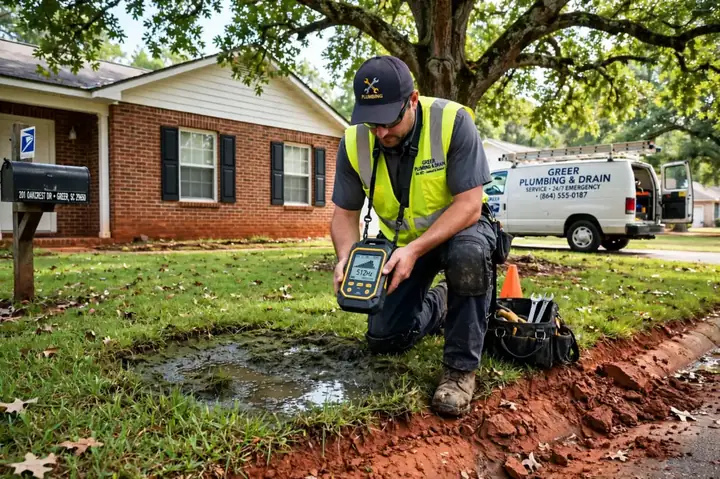
Sewer Line Leak Repair
A sewage pipe leaking in the basement, a wet spot that keeps growing, a smell with no visible source — leaks start small, and detection keeps the repair small.
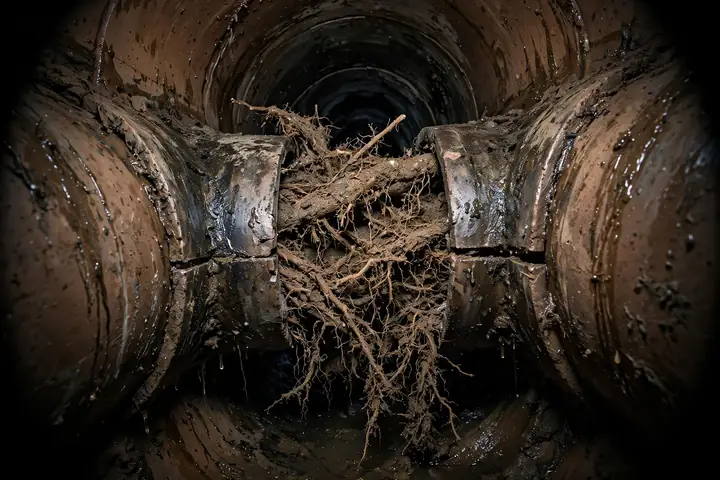
Tree Roots in Your Sewer Line
Roots enter at the joints, and the red clay common across the Upstate swells when wet and shrinks when dry, working those joints open. Cutting roots restores flow for a season; only a structural fix ends the cycle.
Trenchless vs. Digging It Up
| Trenchless lining (CIPP) | Pipe bursting | Traditional excavation | |
|---|---|---|---|
| How it works | A resin liner is cured inside the existing pipe | A new pipe is pulled through as the old one is broken apart | Trench opened along the line; pipe replaced in the open |
| Digging | Small access pits in most cases | Access pits at each end | Full trench; driveway or street cut if the line runs beneath |
| Works when | The pipe is damaged but holds its shape and slope | Most failed lines, including many a liner can't serve | Any condition |
| Cannot fix | A collapsed section; a sagging line (the liner follows the existing slope) | A sagging line's slope — bursting follows the old line's path | — |
| Lifespan | Manufacturers rate liners in decades (~50 years commonly cited); the installed result depends on host-pipe condition and installation quality | A genuinely new pipe — a full new-line lifespan | A full new-line lifespan |
The full trenchless guide, including lining vs. bursting
Repair or Replace?
| Spot repair | Trenchless repair | Full replacement | |
|---|---|---|---|
| Best for | One localized failure | Longer damaged runs in a sound-shaped pipe | Collapsed, multi-bellied, or end-of-life lines |
| Digging | One excavation at the damage | Little to none | Trench along the line |
| The honest question | "Is the rest of the line healthy?" | "Is the pipe's shape and slope sound?" | "Has this line failed in more than one way?" |
The full repair-vs-replacement checklist
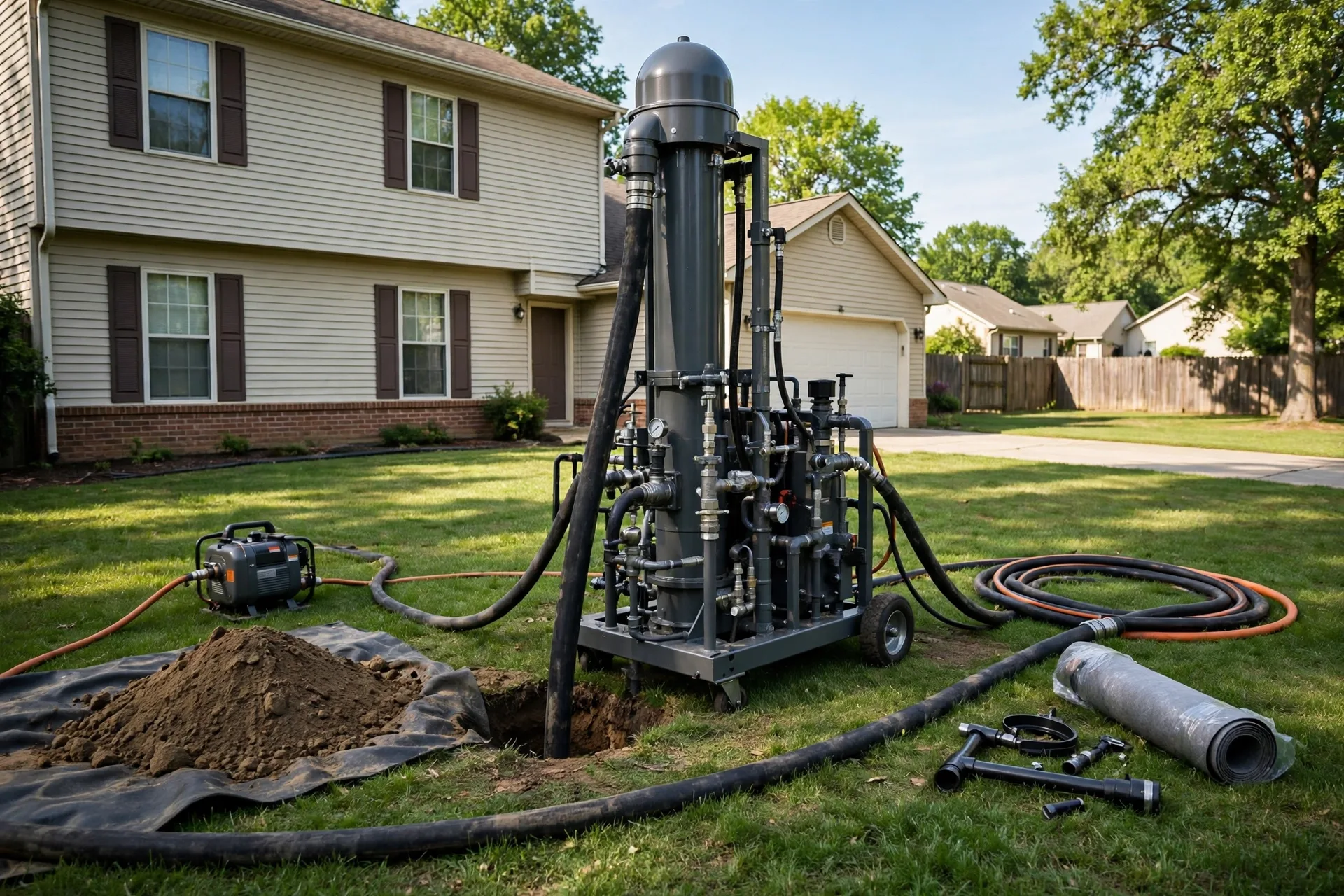
What Sewer Line Repair Costs in Greer — Published Ranges, Clearly Labelled
Short answer: published Greer-area estimates put repair at $1,000–$4,000, a camera inspection at $150–$400, and trenchless replacement at $3,500–$10,000 — and per-foot rates ($50–$300/ft for repair) mean length and depth move your real number more than anything else. These are published third-party estimates, not Greer Sewer Pros pricing and not quotes:
| Service | Published range | Source |
|---|---|---|
| Sewer line repair | $1,000 – $4,000 | Modernize, Greer SC cost page |
| Trenchless sewer line replacement | $3,500 – $10,000 | Modernize, Greer SC cost page |
| Sewer camera inspection | $150 – $400 | Modernize, Greer SC cost page |
| Repair, per foot | $50 – $300 / ft | Mr. Rooter (franchise-published, Greer-area pages) |
| Trenchless replacement, per foot | $60 – $250 / ft | HomeAdvisor cost data |
Per-foot numbers are where totals are made: a 50-foot job at those bands runs $2,500–$15,000 before restoration.
What moves your final quote: what the camera finds, the pipe's material and condition, length and depth, access, the method, excavation and restoration, and permits. And the most repeated advice in homeowner discussions costs nothing: get more than one quote, and make each one show its footage. The full cost guide.
Sewage Backing Up Right Now?
- Stop running water. No flushing, laundry, or dishwasher — it all goes to the backup.
- Keep people and pets clear, and wash thoroughly after any contact. Sewage is a genuine health hazard. If standing sewage is near electrical outlets or appliances, stay out of the area entirely.
- Skip chemical drain cleaners. They can't reach a main-line failure and they make the line dangerous to open.
- Call +1 (864) 874-0043 — and establish first whether the failure is on your side of the cleanout; the CPW guide explains why that decides who pays.
One coverage note: repairing the pipe is one cost, and cleaning up backup damage is another. The South Carolina Department of Insurance notes most homeowners policies exclude sewer and drain backup damage unless a specific endorsement is added.
A service-line endorsement is a third, separate product. Whether any of them pays depends on your own policy's wording. Complete backup steps and cleanup guidance.
Already Tried a Plunger, a Snake, or Drain Cleaner?
A rented snake that clears the clog for a few weeks is useful information: it usually means the blockage isn't the disease, it's the symptom. Roots re-enter the same joint, grease re-coats the same rough wall, a belly re-fills with the same sediment.
Cleaning genuinely fixes a blocked line; it cannot fix a broken one. Greer CPW's own "Can the Grease" campaign exists because of what goes down local drains: CPW reported pulling 17 tons of trash, wipes, and grease from this city's wastewater in 2023.
If a line clogs twice in a season, stop paying for cleanings and get the camera in. Cleaning vs. repair — and the inspection that tells them apart.
You or Greer CPW — Who Is Responsible?
Short answer: if the failure is between your house and the cleanout at the road, it's yours; beyond the cleanout, it's Greer CPW's.
In CPW's own public guidance the dividing line is the cleanout, typically at the road. A failure on the home's side is the homeowner's responsibility — in the words of CPW's public information coordinator, "they've got to call out a plumber." CPW maintains the public main beyond it, and your home's pipe — the lateral — is yours from the house to that cleanout.
This is CPW's published position as reported in local news; the exact boundary for a specific address can be confirmed with CPW. The full guide: laterals, cleanouts, and who to call first.
Why Greer Sewer Lines Fail the Way They Do
- Downtown and the mill villages (Greer Mill, Victor Mill, Apalache) hold some of the city's oldest homes — and CPW has said downtown's pipes are among the oldest on its system, some a century old; CPW has been replacing downtown lines since 2017.
- Sugar Creek and Silverleaf, marketed on their mature oak canopies — and mature roots working toward older jointed laterals is exactly the combination that invades sewer lines.
- Pelham Falls, on the Enoree River, and Greer's low-lying pockets show the wet-weather pattern — groundwater pushing through cracked joints after storms.
- Newer subdivisions start with PVC — but settling soil bellies young lines too.
- The grease streets are named, not guessed. CPW's "Can the Grease" campaign calls out Hammett Farms, Ashley Commons, Village Court, and Chartwell Estates by name.
- Thornblade and the landscaped lots off Batesville Road are where the trenchless conversation starts itself: when a yard is worth real money, "how much of it do we have to dig up?" is the first question.
From the ground down: Greer ground moves. The red clay takes on water all winter — we get about fifty inches of rain a year — swells, then shrinks back in a dry August, and every cycle works on your pipe joints a fraction at a time.
Add an oak that's been drinking from the same joint for twenty years and a line laid before your house had a dishwasher, and you don't have a mystery. You have Greer. None of that shows up on a quote pad — it shows up on a camera, which is why the camera goes first.
Which material is under your house — clay, cast iron, Orangeburg (the 1950s–70s fiber material now at or past its typical 30–50-year lifespan), or PVC — is a camera question.
How common each material is in Greer has never been measured. What is known is Greer's housing ages, and they put a large share of homes squarely in the clay, cast-iron, and Orangeburg eras.
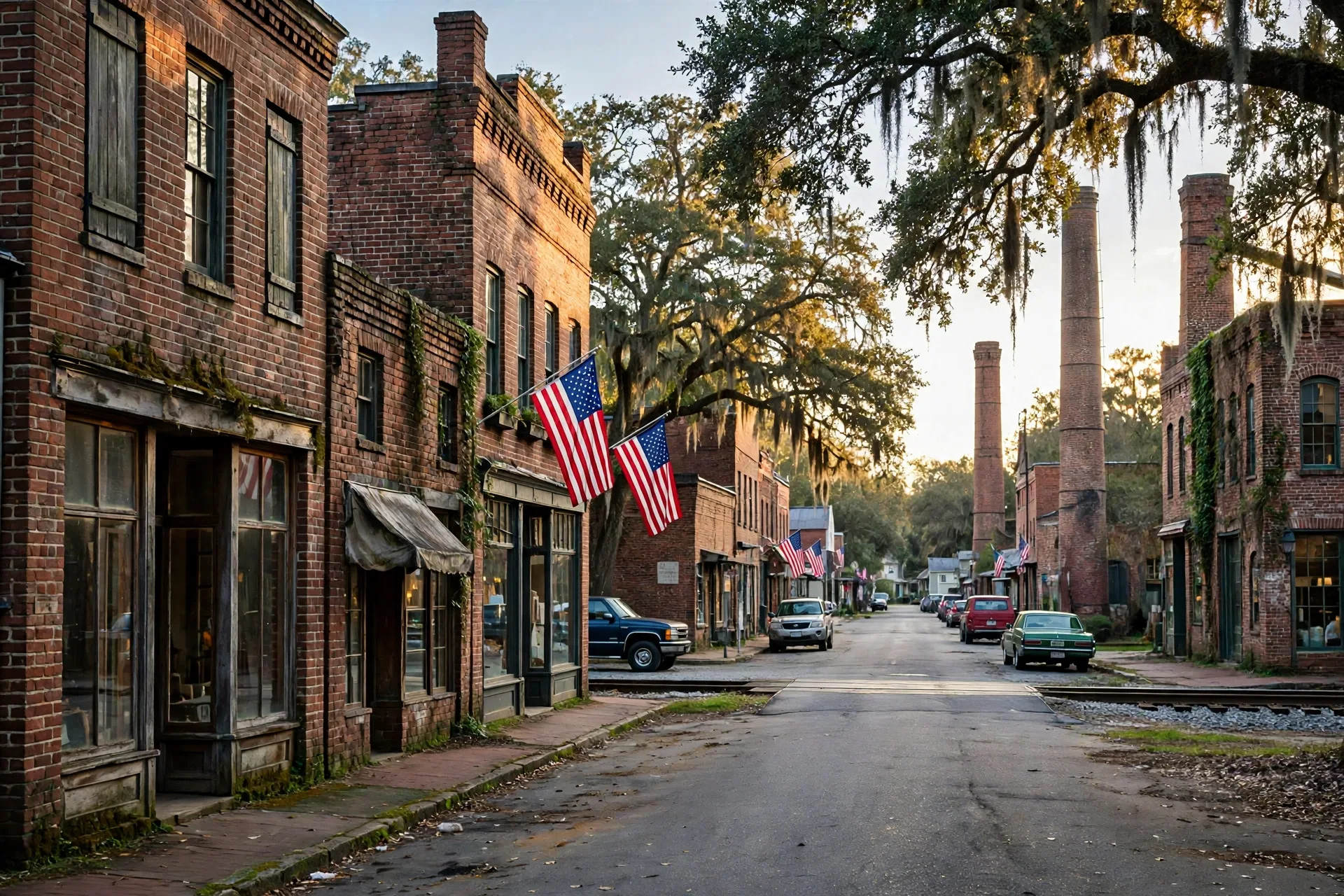
Recent Work in Greer
How jobs like yours actually run here — the problem, the process, and the equipment, neighborhood by neighborhood.
Sugar Creek — 1970s ranch, roots in a clay lateral
The symptom: backups every few months, each cleaning buying less time than the last.
What the camera found: oak roots entering at two joints of the original clay lateral, about 35 feet out — the pipe itself still round, slope still good.
The fix chosen: trenchless lining. Replacement was the alternative and was rejected together with the homeowner — the host pipe was sound, and digging meant going through a mature oak's root zone and the driveway's edge.
The process: the line was root-cut and hydro-jetted clean first, re-inspected on camera to confirm the pipe's shape, then the liner was pulled in from the cleanout, inflated, and cured in place. A final camera pass verified the finished line before sign-off.
Equipment used: sewer inspection camera with locator, mechanical root cutter, hydro jetter, CIPP liner and curing equipment. No trench — two small access points only.
Timeline: one working day. Cost band: inside the published trenchless range on this page.
Sample case study — illustrative example in the format used for documented jobs; to be replaced with a verified job record.
Greer Station / downtown — older home, Orangeburg line at end of life
The symptom: a sewage smell in the crawl space and a wet patch that never dried.
What the camera found: the original Orangeburg lateral softened and deforming — the 1950s–70s fiber pipe doing what it does at 50+ years. Lining was ruled out on the footage: a liner needs a host pipe that holds its shape, and this one no longer did.
The fix chosen: pipe bursting — a new pipe pulled through the old line's path while the old pipe was broken apart, keeping excavation down to access pits at each end on a tight downtown lot.
The process: camera inspection and locating first, access pits dug by mini excavator, bursting head and new HDPE pipe pulled through, connections made, line re-inspected on camera, pits backfilled and the surface restored.
Equipment used: sewer inspection camera with locator, pipe bursting rig, HDPE pipe, mini excavator.
Timeline: two days including restoration. Cost band: inside the published per-foot trenchless replacement band on this page.
Sample case study — illustrative example in the format used for documented jobs; to be replaced with a verified job record.
Pelham Falls — newer home, bellied line by the Enoree
The symptom: gurgling and slow drains after every heavy rain, fine in dry weeks — in a house barely twenty years old.
What the camera found: a belly — a sagging section of PVC holding water and sediment, in ground that stays wet near the river. Trenchless was ruled out honestly: lining and bursting both follow the old pipe's path, so neither can restore slope to a sag.
The fix chosen: open excavation of the sagging section only, re-bedded at correct slope.
The process: camera inspection with depth readings to map the belly, the section excavated, old pipe removed, new section bedded in gravel at a verified slope, camera re-inspection, backfill and lawn restoration.
Equipment used: sewer inspection camera with locator and depth measurement, mini excavator, laser level for slope.
Timeline: one to two days. Cost band: inside the published repair range on this page.
Sample case study — illustrative example in the format used for documented jobs; to be replaced with a verified job record.
What Greer Homeowners Say
★★★★★
"Three cleanings in a year and the tub kept backing up. The camera showed roots in our clay line out in Sugar Creek — they showed me the footage myself, lined the pipe in a day, and the big oak in the front yard never got touched. First time a quote ever came with evidence."
— Homeowner, Sugar Creek
Sample review — to be replaced with a verified customer review.
★★★★★
"I was sure the backup after the storm was the city's problem. Turns out the cleanout at the road decides it, and the break was on my side — they explained the CPW rule, showed me exactly where the pipe had sagged, and fixed just that section instead of selling me a whole new line."
— Homeowner, Pelham Falls
Sample review — to be replaced with a verified customer review.
★★★★★
"Our house near Greer Station is one of the old ones, and I'd already had one five-figure quote with no inspection behind it. These folks put a camera in first, found the old Orangeburg pipe collapsing, and walked me through lining, bursting, and digging with the footage on the screen. Bursting, two days, yard put back. Get the camera before you get the quote — that's the whole secret."
— Homeowner, Greer Station
Sample review — to be replaced with a verified customer review.
Choosing a Sewer Line Repair Contractor in Greer — The Checklist
- Paperwork before promises. Who pulls the permits, exactly what the price includes, and what gets restored afterwards — in writing, before work begins.
- Diagnosis before price. Was the quote built on a camera inspection, and can you review the footage?
- Itemization. Per-foot rate, depth, excavation, restoration, permits — separated, in writing.
- Options. If one method was proposed, ask why the others were ruled out — especially trenchless, with your yard at stake.
- Restoration. Exactly what gets put back — lawn, concrete, street patch — in the written estimate.
- A second quote for a five-figure number. The documented pattern in this market is a quote given without footage that another contractor prices at a fraction. Evidence is the difference.
Start With the Diagnosis, Not the Quote
Slow drains, a smell that won't leave, sewage where it shouldn't be — the next step isn't a repair or a five-figure decision. It's a look inside the line, and a set of questions you now know to ask.
Call Greer Sewer Pros: +1 (864) 874-0043 Request an inspection online