Trenchless Sewer Line Repair in Greer, SC
Short answer: trenchless repair fixes a failed sewer line from the inside — a cured-in-place liner, or a brand-new pipe burst through the old one — using access pits instead of a trench across your yard. It works when the pipe still holds its shape and slope. Lining can't fix a collapsed section, and neither method can correct a sagging line. A camera inspection decides.
Trenchless gets sold two ways in this business: as a miracle, and as a gimmick. From the ground in Greer, it's neither. It's two mature methods, each right for specific jobs.
And a Greer yard is often exactly where they earn their keep: a Sugar Creek lot where the line runs under a forty-year-old oak, a Thornblade yard with real money in the landscaping, a tight Greer Station lot where a trench means the driveway too.
But a liner follows the pipe you've got. If what you've got is collapsed or sagging, no amount of salesmanship changes the geometry.
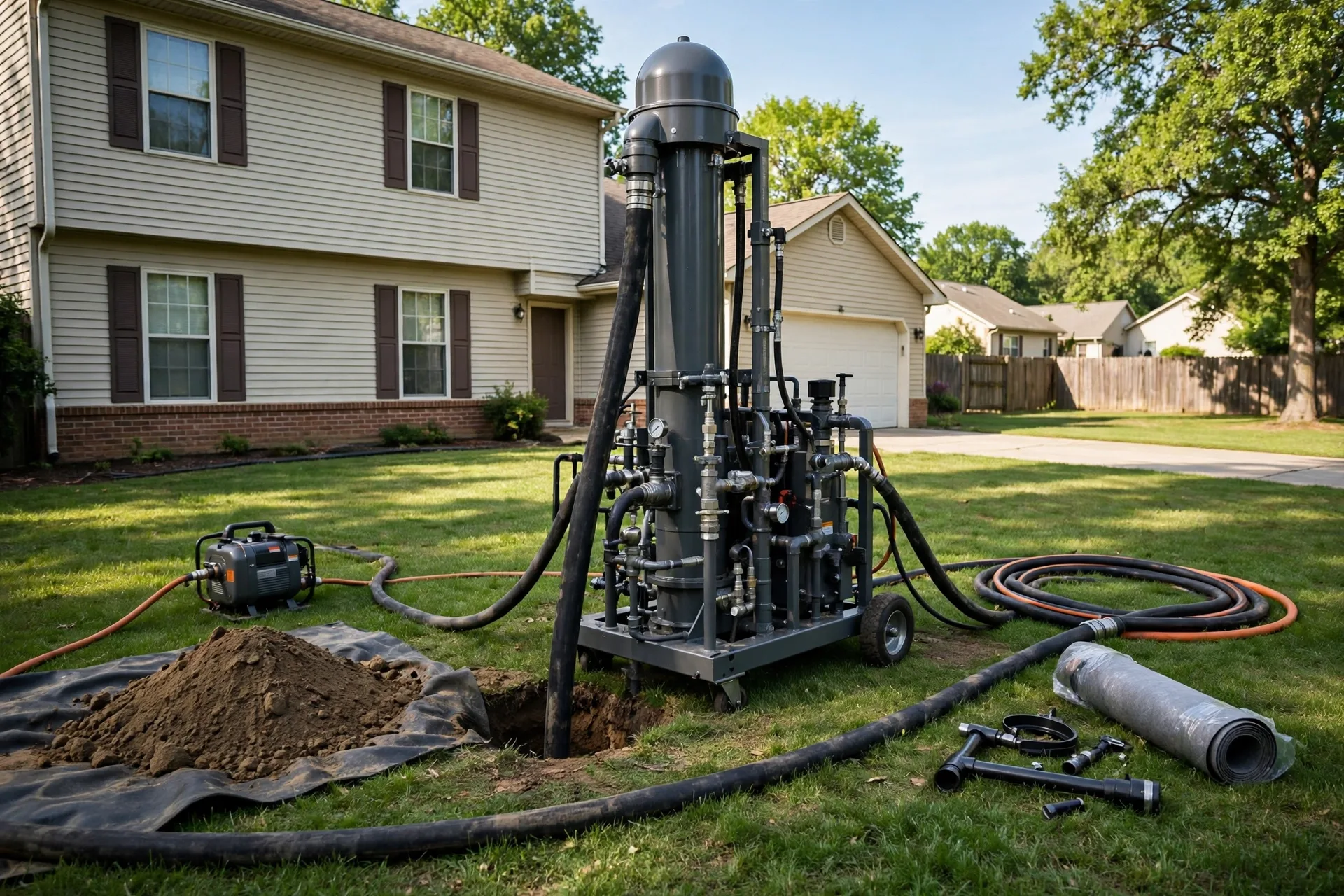
At a Glance
- Two methods: CIPP lining and pipe bursting — a new pipe without a trench across your yard.
- It works when the old pipe still holds its shape and slope.
- Lining can't serve a collapsed pipe, and neither method can fix a sagging (bellied) line.
- A camera inspection decides which method — if any — your line qualifies for.
- Published ranges on this page: lining $90–$250/ft, bursting $60–$200/ft (HomeAdvisor).
Lining, Bursting, or Digging — Compare the Methods
How it works: a resin liner is cured inside the existing pipe, creating a new pipe within it.
Digging: small access pits in most cases.
Works when: the pipe is damaged but still holds its shape and slope.
Cannot fix: a collapsed section; a sagging line — the liner follows the existing slope.
Lifespan: manufacturers rate liners in decades (~50 years commonly cited); the installed result depends on host-pipe condition and installation quality.
How it works: a bursting head breaks the old pipe apart while pulling a new pipe through the same path.
Digging: access pits at each end.
Works when: most failed lines, including many a liner can't serve.
Cannot fix: a sagging line's slope — bursting follows the old line's path.
Lifespan: a genuinely new pipe — a full new-line lifespan.
How it works: a trench is opened along the line and the pipe is replaced in the open.
Digging: the full trench — plus a driveway or street cut if the line runs beneath one.
Works when: any condition, including collapsed and sagging lines.
Lifespan: a full new-line lifespan.
The Two Methods, Plainly
CIPP lining (cured-in-place pipe)
The existing pipe is cleaned and descaled, then a flexible liner saturated with resin is inverted or pulled into it and cured until it hardens into a smooth, jointless pipe inside the old one. Because there are no joints, the root-entry points that caused most Greer failures are sealed off along the lined run.
Pipe bursting
A bursting head is pulled through the old pipe, breaking it apart while dragging a new HDPE pipe in behind it. The new pipe is genuinely new: full lifespan, and it can even be upsized.
Bursting needs access pits at both ends. It handles failure states a liner can't, including many lines too far gone to line.
A third, smaller tool exists — spot/patch lining for a single damaged joint — and it belongs in the same conversation as spot repair; your camera footage decides which scale of fix the line actually needs.
Trenchless vs. Digging — The Full Comparison
| CIPP lining | Pipe bursting | Traditional excavation | |
|---|---|---|---|
| Digging | Access pits in most cases | Pits at each end | Full trench along the line |
| Your yard | Mostly untouched | Mostly untouched | Dug up; driveway/street cut if the line runs beneath |
| Works when | Pipe damaged but holding shape and slope | Most failed lines, incl. many a liner can't serve | Any condition |
| Cannot fix | Collapsed sections; a sag (liner follows existing slope) | A sag's slope (follows the old path) | — |
| Lifespan | Manufacturers rate liners in decades (~50 years commonly cited); result depends on host pipe + installation | Full new-pipe lifespan | Full new-pipe lifespan |
| Typical time on site | Often 1–2 days incl. cleaning and cure | Often 1–2 days incl. pits and restoration | Longer, scales with trench length |
When Trenchless Works — And When It Honestly Doesn't
Good candidates (camera confirms): root intrusion at joints in an otherwise sound pipe; cracked or corroded clay and cast-iron lines that still hold their shape — the classic Greer profile in pre-1980 housing; long runs under driveways, mature trees, porches, or finished landscaping; lines where open digging would reach the street.
Ruled out or redirected:
- A fully collapsed section — lining is out; bursting may still work.
- A bellied line — excavation is the only fix for slope.
- Orangeburg so deformed the camera shows an oval, closing pipe.
- A line with sags in multiple places — at some point replacement stops being the expensive option and becomes the honest one.
The Belly Problem — Why "No-Dig" Can't Fix a Sag
A belly is a low spot where the pipe has sunk. In Greer that's usually settling soil in red clay that swells wet and shrinks dry, working a section down over the years. Water and sediment pool in the sag, and the line clogs from the bottom up, again and again.
Both trenchless methods follow the existing pipe's path, so a lined or burst line keeps the same sag and the same problem.
The only repair that restores slope is excavating that section and re-bedding it at grade. Any contractor who offers to line a documented belly is selling you a smoother version of the same clog — ask to see the camera footage and the depth readings.
How a Trenchless Job Runs
- Camera inspection first. Shape, slope, material, and failure points mapped and located — this is the eligibility test, not a formality.
- Cleaning and prep. Root cutting, hydro jetting, and descaling so the liner bonds to a clean wall (or the bursting path is clear).
- The install. Liner inverted/pulled and cured, or the bursting head pulled with new HDPE behind it.
- Connections reinstated. Any branch connections are reopened on lining jobs.
- Post-repair camera. The finished line is inspected and recorded — ask for this footage; it's the proof of what you paid for.
How Long Does a Liner Last?
Honestly: liner manufacturers rate their products in decades — 50 years is the figure most commonly cited for CIPP — and a properly installed liner in a sound host pipe is a structural pipe, not a coating.
The qualifiers matter: host-pipe condition, cleaning and prep, complete curing, and resin work. A burst or excavated new pipe carries a full new-pipe lifespan without those qualifiers. Get whichever lifespan and workmanship terms apply in writing with your estimate.
What Trenchless Costs — Published Ranges, Labelled
Third-party published figures, not Greer Sewer Pros prices and not quotes:
| Item | Published range | Source |
|---|---|---|
| Trenchless replacement (typical total) | $3,500 – $10,000 | Modernize, Greer SC cost page |
| Trenchless replacement, per foot | $60 – $250 / ft | HomeAdvisor cost data |
| CIPP lining, per foot | $90 – $250 / ft | HomeAdvisor cost data |
| Pipe bursting, per foot | $60 – $200 / ft | HomeAdvisor cost data |
Against excavation, trenchless often lands comparable — sometimes lower — once driveway, landscaping, and street restoration are priced into the digging option; on a simple open-lawn run, digging can be cheaper. The full Greer cost guide.
Trenchless in Greer — The Local Picture
- Sugar Creek & Silverleaf: mature oaks over older jointed laterals is the root-invasion profile lining was made for — seal the joints, keep the tree.
- Thornblade & the landscaped lots off Batesville Rd: when restoration would cost more than the pipe, no-dig stops being a luxury.
- Downtown & Greer Station: CPW has described downtown's pipes as among the oldest on its system — century-old lines on tight lots, where bursting replaces without opening the whole yard.
- Anywhere the line crosses a driveway or the street: excavation adds concrete and permit/restoration work that trenchless mostly avoids.
Not sure trenchless fits your line? That's a camera question, and it's the cheapest one on this page to answer. Call Greer Sewer Pros: +1 (864) 874-0043
